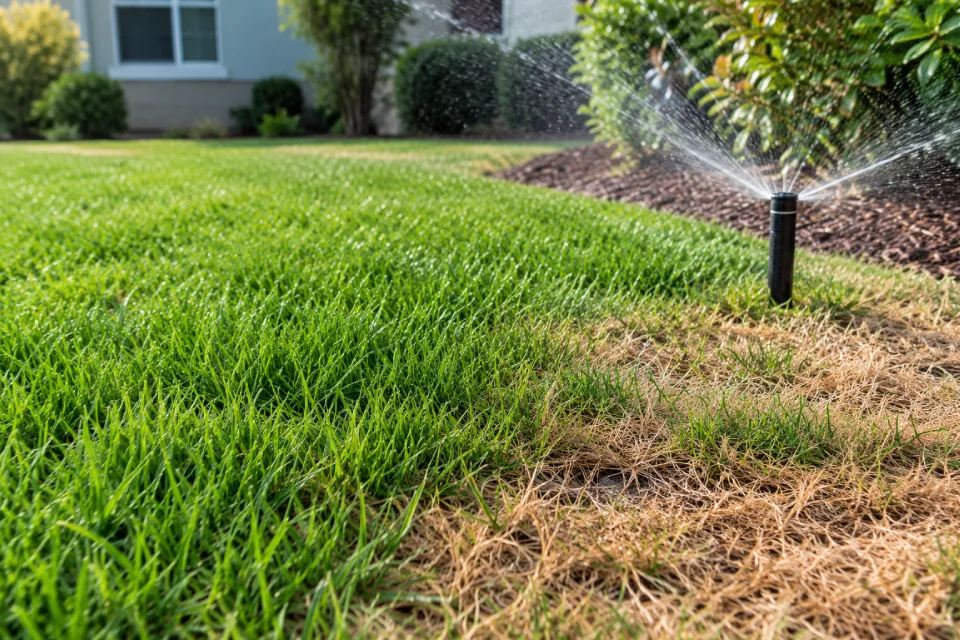
When parts of your lawn stay dry even though your sprinklers run on schedule, the water usually isn’t reaching those areas evenly. The most common causes are clogged or damaged sprinkler heads, heads blocked by grass or plants, low water pressure, a leak in the irrigation line, poor head spacing, or run times that don’t match the needs of each zone. In some cases, the dry patch isn’t a watering problem at all.
The good news is that most of these issues can be identified with a few simple checks, and many are straightforward to fix once the cause is clear.
Common Reasons Parts of Your Lawn Stay Dry
- Clogged nozzles. Sand, debris and mineral buildup can partially block a nozzle, so it sprays a shorter distance or an uneven pattern.
- Broken, sunken or tilted heads. Heads damaged by mowers or foot traffic, or that have sunk below the grass line, can’t spray at their intended height and distance.
- Heads blocked by grass or landscaping. Tall grass, growing shrubs or new landscape features can block the spray before it reaches the lawn.
- Misaligned spray patterns. A head that has turned can end up watering the driveway, sidewalk or house instead of the grass next to it.
- Low water pressure. When pressure is too low, heads don’t pop up fully or spray as far as they should. Causes include too many heads on one zone, a partially closed valve or a leak somewhere in the system.
- A leak in the irrigation line. A broken pipe or fitting can reduce the water reaching the heads further down the line. A common clue is a soggy area in one spot and dry grass beyond it.
- Poor head spacing. For even coverage, the spray from each head should reach the next one. When heads are spaced too far apart, the areas between them get less water.
- Mixed head types in one zone. Spray heads and rotors apply water at very different rates. When both are on the same zone, some areas receive too much water while others stay dry.
- Run times that don’t fit the zone. Areas in full sun, near pavement or on slopes often need different settings than shaded areas. A single schedule for every zone can leave some areas short.
- Controller or valve problems. A faulty valve or a programming error can keep a zone from running, or cut it short, without the rest of the system showing a problem.
Is It Really a Watering Problem?
Not every brown or thin patch is caused by the irrigation system. Before adding more water, consider other common causes in Florida lawns:
- Insects. Chinch bugs are a common pest in St. Augustinegrass and often cause yellowing patches in hot, sunny areas, especially along driveways and sidewalks. Extra water won’t fix insect damage.
- Lawn disease. Fungal problems can cause circular or irregular patches, and overwatering can make some of them worse.
- Soil conditions. Compacted soil can keep water from soaking in, and sandy soil drains quickly, so shallow watering dries out fast.
If the heads in the area are working properly and the soil is getting water, the problem may be pests or disease rather than irrigation. Your local UF/IFAS Extension office can help identify lawn pests and diseases.
Simple Checks You Can Do
Watch each zone run. Use your controller’s manual or test mode to run one zone at a time. Look for heads that don’t pop up, spray in the wrong direction, produce a weak or misty spray, or leave puddles. Note anything unusual by zone.
Do a catch can test. This test shows how much water each zone applies and how evenly. The UF/IFAS Gardening Solutions program recommends it for Florida lawns:
- Place five to ten straight-sided cans, such as tuna or coffee cans, randomly within one zone.
- Run that zone for 15 minutes.
- Measure the water depth in each can.
- Repeat for every zone.
If some cans have much less water than others, that area isn’t getting even coverage. According to UF/IFAS, most Florida soils need about 1/2 to 3/4 inch of water per irrigation event. The test also helps you see whether the zone’s run time delivers that amount.
Check the controller schedule. Confirm that each zone is programmed, that run times haven’t been changed and that the watering days follow your local restrictions. The Southwest Florida Water Management District publishes guidance on irrigation schedules and run times for the region.
Why Increasing Run Time Usually Isn’t the Fix
When one area looks dry, it’s tempting to add more minutes to the whole zone. But if the cause is a clogged head, a leak or poor coverage, longer run times mainly add more water to the areas that were already covered. That wastes water, can encourage disease in overwatered spots and may conflict with local watering rules. Fixing the coverage problem is usually more effective.
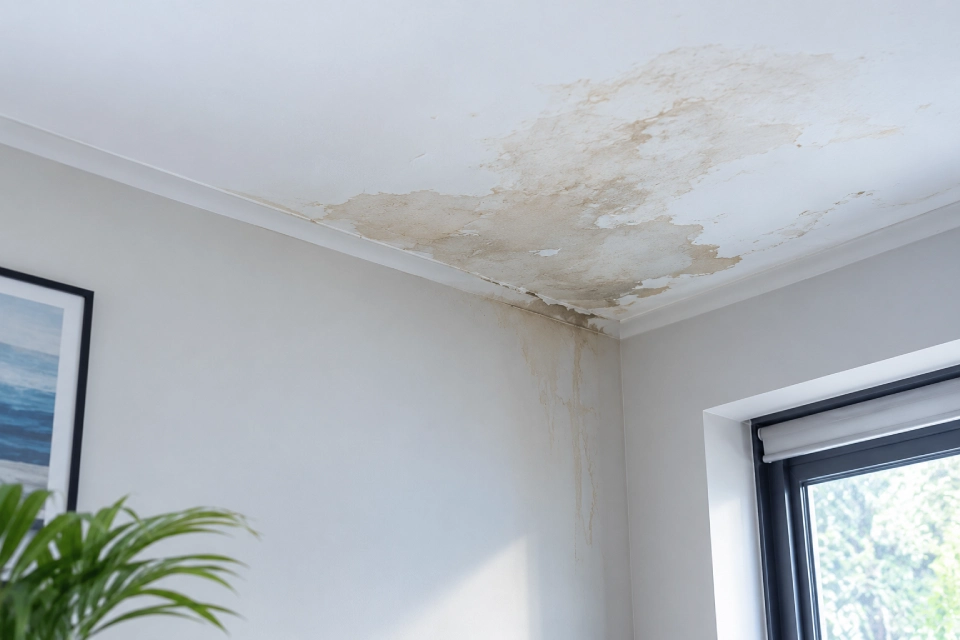
If you notice soggy areas that don’t match any irrigation zone, the water could be coming from your home’s plumbing instead. Learn the signs of a hidden water leak.
When to Call a Professional
Consider a professional irrigation inspection if:
- Several heads in a zone don’t pop up or spray weakly.
- A catch can test shows uneven coverage you can’t explain.
- You see soggy spots, bubbling soil or water running when the system is off.
- A zone doesn’t turn on, or won’t turn off.
- Dry areas keep coming back after you’ve cleaned and adjusted the heads.
A technician can check pressure, valves, wiring and head layout to find the cause and recommend the right repair, from replacing nozzles and heads to adjusting zones or programming.
Get Help With Uneven Sprinkler Coverage
Performance PCL provides irrigation repair and troubleshooting for residential and commercial properties in Tampa and throughout Hillsborough, Pinellas and Pasco counties, including HOA communities. We are licensed and insured. If parts of your lawn stay dry despite a running system, we can help you find the cause and restore even coverage.
Request an estimate or call (727) 275-2624.
FAQ
How long should I run my sprinklers in Florida?
It depends on the type of heads in each zone, your soil and the season. UF/IFAS recommends applying about 1/2 to 3/4 inch of water per irrigation event for most Florida soils. A catch can test is the most reliable way to find the right run time for each zone. Always follow your local watering restrictions.
Can I fix dry spots by watering longer?
Usually not. If the cause is a clogged head, a leak or poor coverage, longer run times mostly add water to areas that were already getting enough. Fixing the head, pressure or layout problem is more effective and uses less water.
Why is my lawn dry near the driveway or sidewalk?
Areas next to pavement heat up more, and heads near edges are often misaligned or blocked. In St. Augustinegrass, chinch bugs also tend to appear in hot, sunny spots like these, so check for insects if the heads are working properly.
How often should I check my irrigation system?
A good habit is to run through each zone regularly, for example once a month, to catch broken or misaligned heads early. A professional inspection is a good idea when problems keep coming back or before the drier months of the year.